

🔖 Work / Study Myths
“ADHD isn’t a lack of potential — it’s a different pathway to performance.”
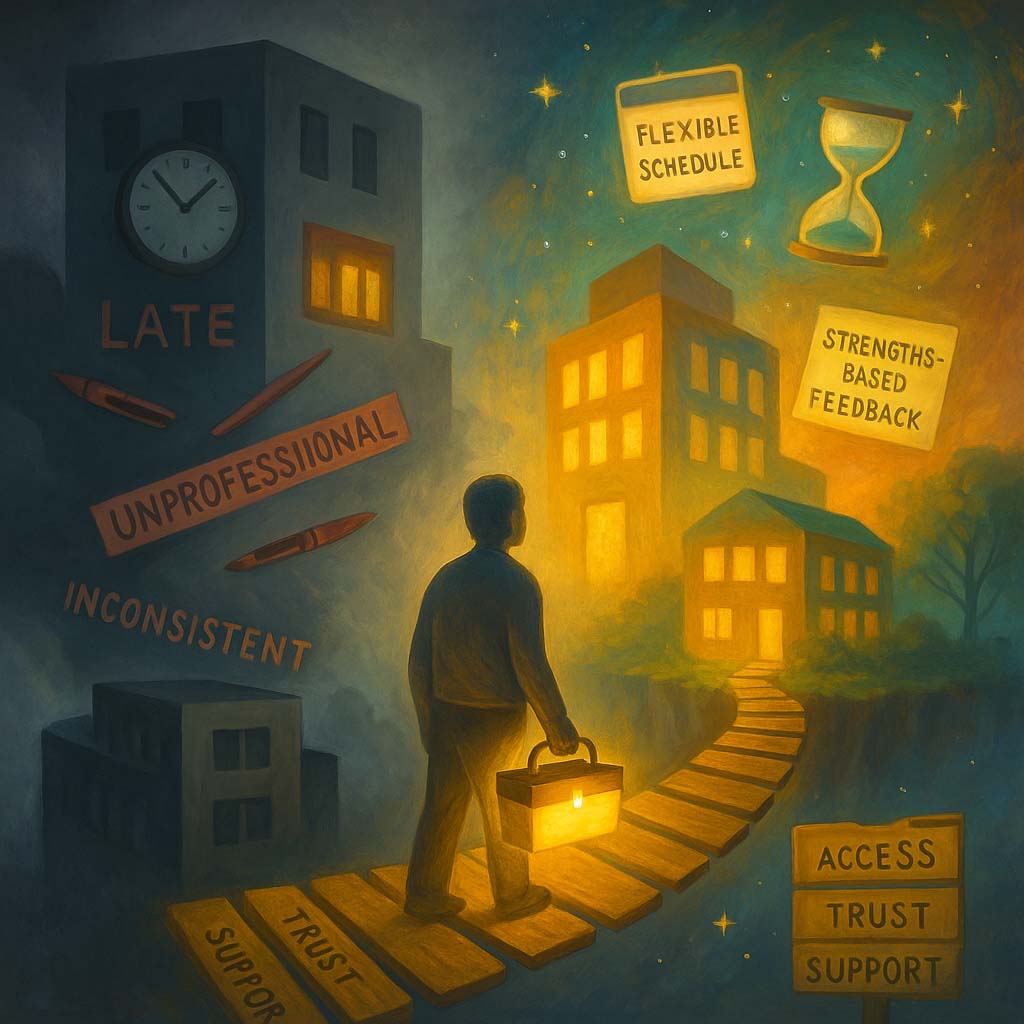
In schools and workplaces, ADHD is often misunderstood as irresponsibility, inconsistency, or lack of commitment. But many adults with ADHD possess immense creativity, insight, and energy — they just need environments that work with their brains, not against them. This section busts the myths that undermine ADHDers in professional and academic settings. From rigid assumptions about productivity to mislabeling emotional sensitivity as weakness, these myths hold back not just individuals — but entire teams, classrooms, and communities. With the right supports, ADHD doesn’t impair excellence — it unleashes it in new and dynamic ways.
💡 Myth Busting 101
Adult ADHD: Myth Busting 101 dismantles the misconceptions that shape how ADHD is judged, treated, and lived with in adulthood.
Working myth by myth, the book replaces stereotypes and blame with evidence, understanding, and compassion. Across nine themed sections — from diagnosis and medication to work, relationships, and strengths — it helps readers recognise patterns rather than personalise struggle.
Written by a psychiatrist–therapist team specialising in adult ADHD, this is a guide for adults with ADHD, those who love them, and the professionals who support them.
Not about lowering standards. About raising understanding — and rewriting the story.
Please note the books available on Amazon are soft cover, the images are hard cover mock ups of the soft cover books.

“They’re unprofessional if they need reminders or accommodations.”
✅ Truth: Accommodations for ADHD aren’t indulgences — they’re access enablers. ADHD impacts executive functions like memory, time management, and organisation. Tools like deadline extensions, written and verbal instructions, or flexible start times aren’t “special treatment” — they’re what level the playing field. In fact, when given these supports, adults with ADHD often become some of the most engaged and productive team members. Supporting accessibility is professionalism — not the opposite.

“They can't hold a job — they’re too chaotic.”
✅ Truth: The ADHD brain thrives in environments that offer movement, creativity, and variety. Many adults with ADHD struggle in rigid, overly structured settings, but excel in dynamic roles like entrepreneurship, design, emergency response, or tech. What looks like chaos is often mismatch, not incapacity. When allowed to work in ways that align with their strengths — short bursts, big-picture thinking, or task rotation — ADHDers can flourish with energy and innovation.
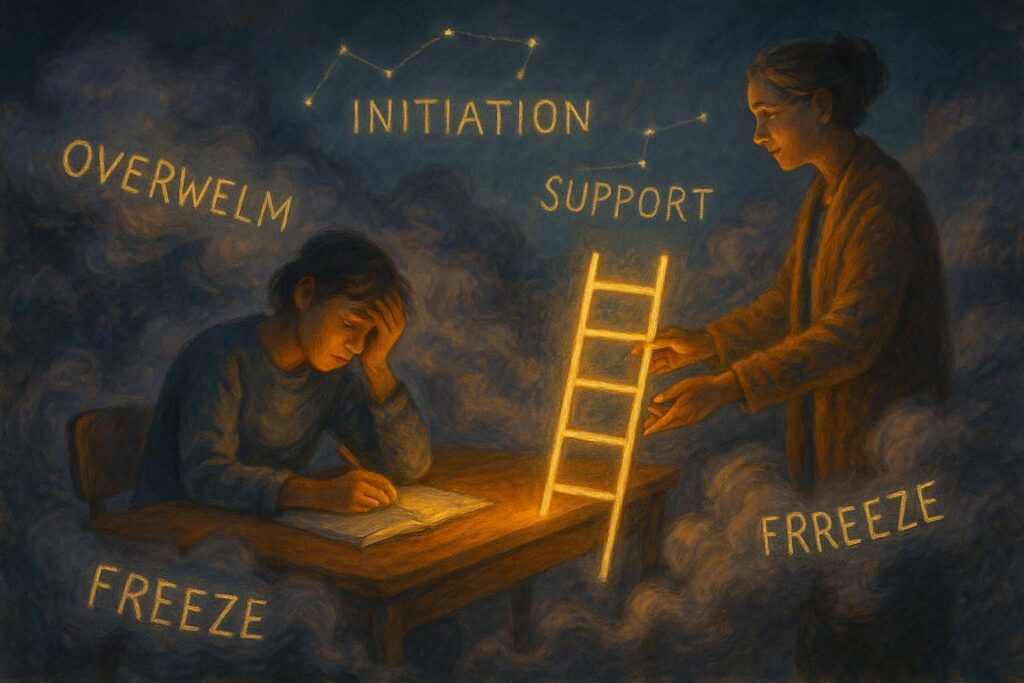
“They’re lazy students — they don’t apply themselves.”
✅ Truth: Many students with ADHD expend twice the effort just to get started. They may stare at a blank screen for hours — not out of apathy, but from executive paralysis. The initiation barrier is real. Once started, they often work hard and care deeply, but may still fall short on deadlines or formatting. Their struggle is invisible — and their effort often unrecognised. With task scaffolding, interest-based learning, and compassionate flexibility, they thrive.

“They’re always making excuses for missing deadlines.”
✅ Truth: Deadline struggles stem from time blindness, perfectionism, and overwhelm. Adults with ADHD may sincerely believe they have more time, only to panic when urgency hits. They might also freeze under unstructured tasks, unable to prioritise or break things down. This isn’t excuse-making — it’s a cognitive disconnect that needs external planning tools, deadline previews, and pacing structures to bridge the gap between intention and completion.

“They’re not detail-oriented, so they can’t be trusted with important work.”
✅ Truth: Many ADHDers are actually hyper-focused on details — especially when a task is meaningful or stimulating. The challenge isn’t with capability — it’s with sustained attention over time or on uninteresting tasks. Trusting them with important work means helping them structure it: chunked deadlines, visual progress markers, and room for creativity. When interest and support align, their detail orientation can be remarkable.

“They change jobs or majors too often — they can’t commit.”
✅ Truth: Frequent transitions are often a sign of multi-passionate, curious brains seeking alignment. ADHDers might leave jobs when bored, burnt out, or under-supported — not because they lack loyalty, but because they crave purpose and stimulation. Changing paths isn’t flightiness — it’s often an act of survival and self-preservation. In the right environment, with space to grow and evolve, their loyalty and impact are deep and lasting.
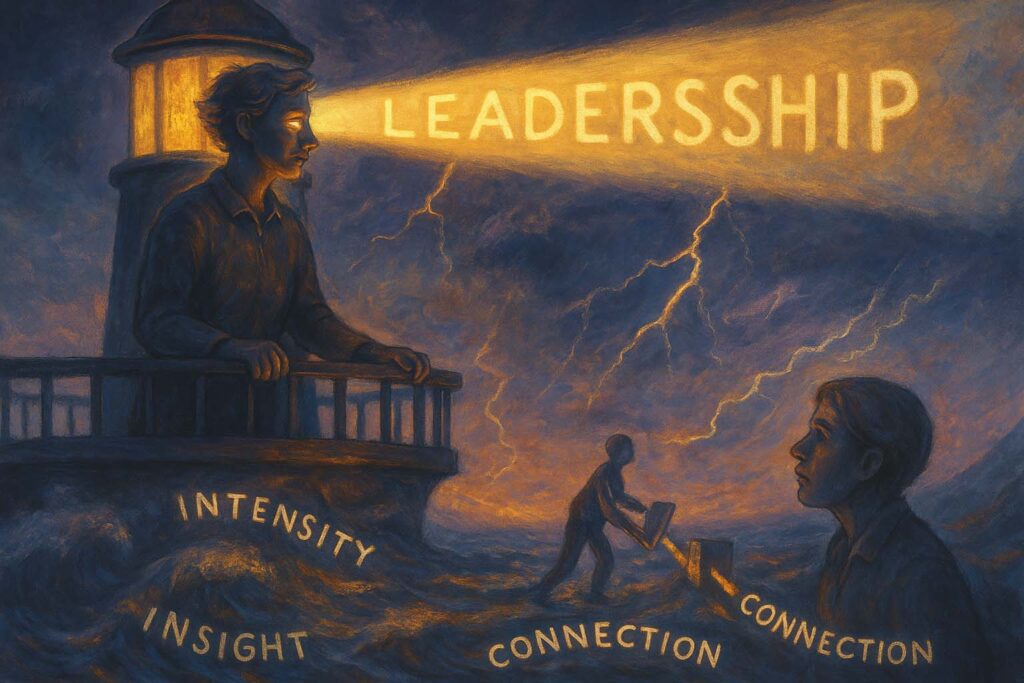
“They’re too emotional to lead or manage others.”
✅ Truth: Emotional sensitivity in ADHD can be a profound leadership strength. It fosters empathy, creativity, and deep relational insight. With coaching and emotional regulation support, adults with ADHD often become values-driven leaders who inspire innovation and inclusion. Their intensity — once harnessed — creates powerful bonds and fuels resilience. Emotional depth isn’t a liability; it’s a superpower in the right culture.

“They ask too many questions — they’re not focused.”
✅ Truth: ADHD curiosity can be intense — and misunderstood. Asking lots of questions isn’t distraction; it’s pattern-building. They’re often connecting dots others miss or seeking context to feel secure enough to proceed. Tangential questions are sometimes how they stay engaged. Instead of shutting them down, try guiding their curiosity — or recognising that their brain might just be running faster, not off-course.

“They just need to set goals and stick to them.”
✅ Truth: Many adults with ADHD perform exceptionally under pressure — especially in novel, fast-paced, or time-sensitive situations. Their brains often access focus and clarity in a crisis because urgency activates dopamine pathways that are otherwise under-responsive. The challenge isn’t the pressure itself — it’s managing the lead-up and the recovery. With pacing tools and downtime after surges, they become crisis-capable and creatively adaptive.
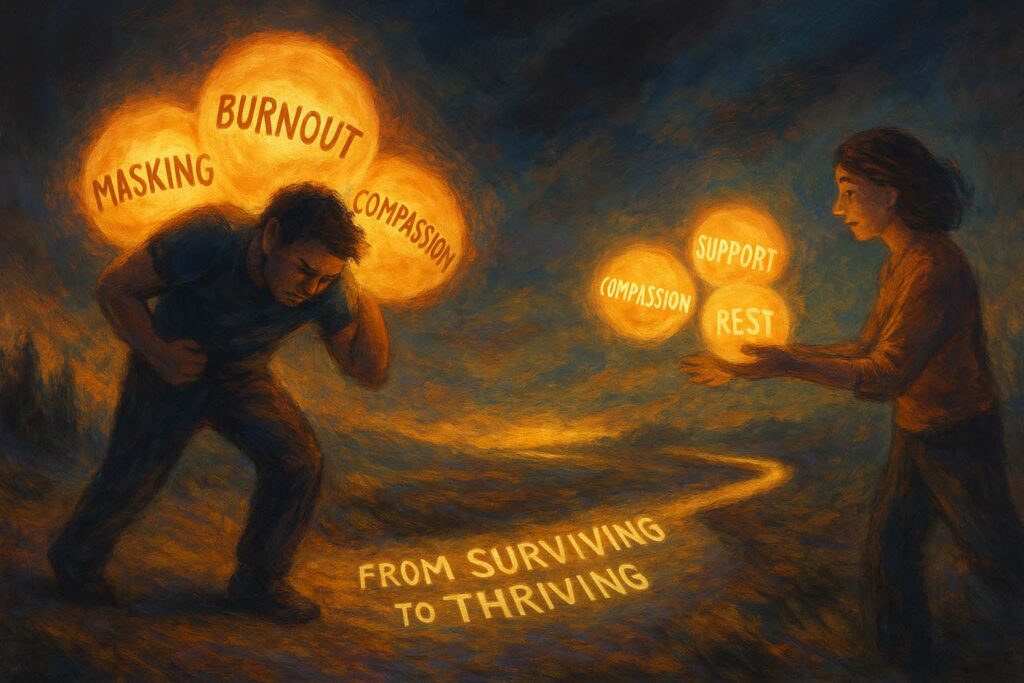
“They don’t need support — they’ve done fine so far.”
✅ Truth: “Fine” is often code for masked, exhausted, and barely hanging on. Many adults with ADHD compensate through perfectionism, people-pleasing, or overwork — until they crash. Just because someone looks high-functioning doesn’t mean they’re thriving. In fact, the more capable someone appears, the more invisible their effort may be. They deserve support not because they’ve failed — but because they’ve been carrying too much, for too long, alone.
🌟 Redefining Success for ADHD Minds
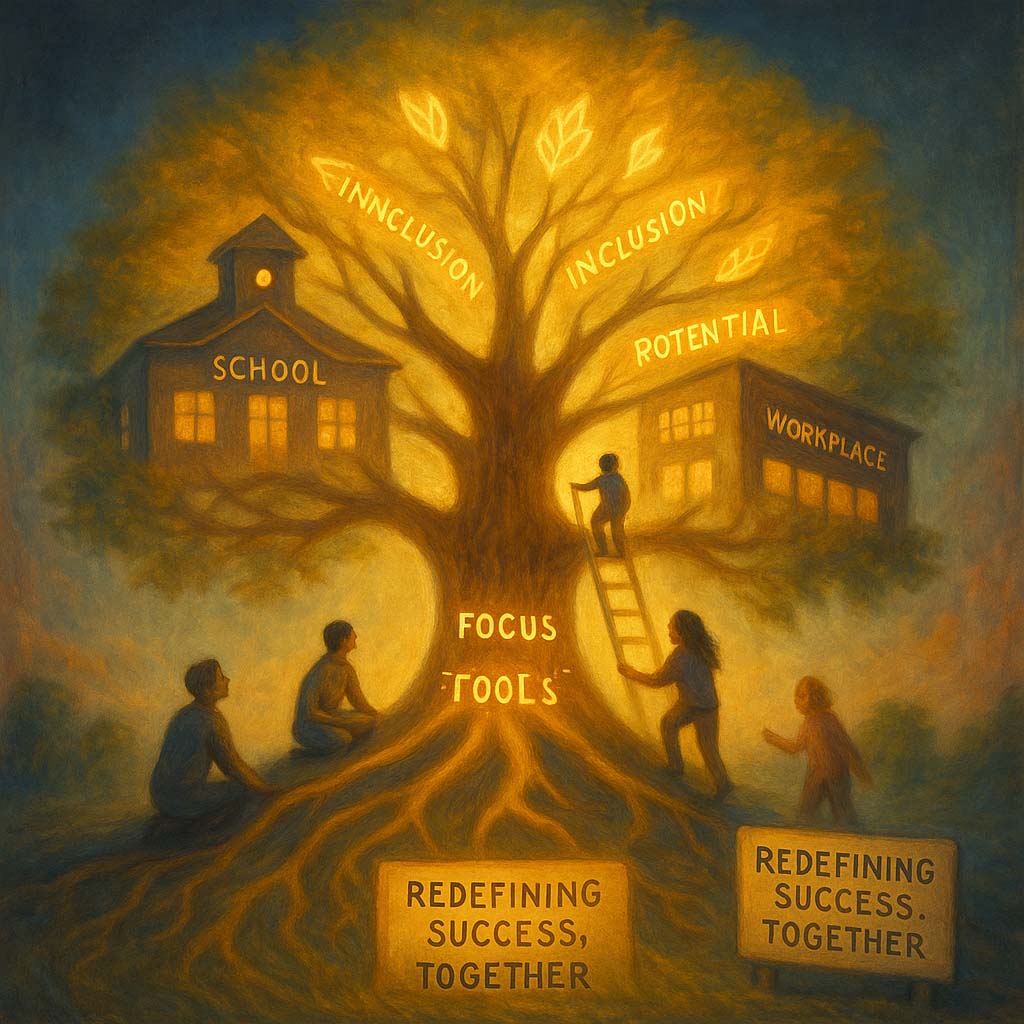
The workplace and classroom should not be places of shame — but of adaptation, strengths-recognition, and inclusion. ADHD is not about failing to meet expectations — it’s about needing a different route to get there. When we stop measuring professionalism by conformity and start recognising brilliance in diversity, ADHD becomes not a deficit — but a new kind of difference worth embracing. Tools, trust, and autonomy can turn chaos into contribution.
Mon - Fri: 8AM - 6PM
Sat - Sun: Variable
Brisbane North Medical Specialists,
15 Dallas Parade, Keperra, QLD 4054
(07) 5221 3489
reception@bnms.com.au